The Basics Of What They Are and How They Grow
Autoflowering strains are a special type of cannabis plant that doesn’t use light cycles to switch their growth phases. Although the way they respond to light is their most unique feature, there are other ways in which these varieties differ. In this article, I’ll discuss the basics – giving an easy-to-digest overview of this unique type of weed and highlighting the essential things to know before you grow.
Key Takeaways:
- When grown well, they can be just as potent as regular cannabis.
- It’s common for autoflowers to be smaller and yield less.
- Their compact size makes them ideal for stealth growing.
- Autoflowers aren’t influenced by light cycles.
- They cannot be kept as mothers, like photoperiod plants.
The Origins of Autoflowers
So, where did this strange variation of cannabis originate?

Autoflowers can be traced back to the Cannabis ruderalis plant, a sub-species of cannabis that has its history in Central and Eastern Europe. This variety of cannabis managed to survive the most trying conditions, starved of both light and warmth and still managed to prosper. This is similar to how Cannabis Indica evolved and adapted to the harsh conditions of the Kush mountains, or how Cannabis Sativa evolved in areas like Africa, to withstand extreme heat, summer rainfall, and huge amounts of UV light.
Then in the early 2000s, a strain called Lowryder was released. This strain crossed the lesser-known Cannabis ruderalis with Indica and Sativa lineage to create the first commercially available autoflower.
While Lowryder was a breakthrough in the cannabis world, it didn’t exactly stand up against some of the elite cuts of the era. Remember, OG Kush and Chem was already around at this point, along with classics like White Rhino, AK47, etc.
The Lowryder was seen by many traditional cultivators to be a gimmick, and its low yields and weak potency often saw it catching heat in online forums. Since then, through nearly 2 decades of breeding autoflowers have long surpassed the quality offered by the Lowryder. For many strains, the Lowryder still features somewhere in its genetic pool, but so much selective breeding has been done since back then that modern autoflowers can achieve significantly better yields and potency.
Today, some autoflower breeders have created plants that can easily rival the average photoperiod.
Are They Easier To Grow Than Regular Cannabis?
- Autoflowers are more forgiving in flower but need an excellent veg environment.
- Photoperiods are more forgiving in veg but need a precise flowering environment.
In my experience working in the seed industry, a common query customers have is whether autos are easier or harder to grow than regular photoperiod cannabis plants. The answer is… it depends.
I’ve always found autoflowers to be quite easy in getting to harvest with, which for most people will be enough. But if you want to truly maximize your returns and get the most out of your autos, the process becomes a bit more difficult than with standard cannabis plants.
It all comes down to how forgiving they are. Autos are more forgiving in their flower cycle, whereas photoperiod plants are more forgiving in the vegetative phase. That’s because you won’t need to worry about adjusting your lights, and reduces the chances of light-induced stress that can cause photoperiod plants to herm (develop male pollen sacks and potentially self-pollinate).
If you give your auto a comfortable life for the first 6 months, chances are you’ll be in a great spot. If you neglect them during veg or trigger some kind of strong stress situation, you’re not going to be afforded the luxury of fixing that problem.
Understanding Autoflower Light Cycles
- Autoflowers flower due to age, not light cycle changes.
- They can be grown in any light cycle.
- Less hours of light will result in lower yields.
- 18/6 to 20/4 is widely considered ideal for autos.
Light cycles are a core component of a cannabis plant. Throw it in too much during flower and it’ll revert back to veg, give it too little during veg and it’ll go into flower. Traditional photoperiod plants are usually vegged under 18 hours of light and 6 hours of darkness and then flowered under 12 hours of light and 12 of darkness.
Autoflowers aren’t impacted by these light changes, at least not in the same ways. If you put an autoflower plant outside during summer, it’ll grow for a few weeks and then go into flower. Grow it in winter and it’ll do the same thing. The same can be said for indoor growers. You can throw your autoflower into your veg tent or your flower tent and the plant is going to transition between its phases at the same rate.
Keep in mind, however, that the amount of light does drive the plant’s photosynthesis and subsequent growth, meaning plants that receive more light are going to typically be larger and yield more, sometimes substantially so.
This flexibility to veg and flower in any light cycle is what makes the autoflower such a popular choice. Worried about growing outdoors cause your neighbour has a flood light on outdoors that you’re worried may cause problems with a photoperiod? Just grow some autos instead, they’ll handle it with no problem.
The Seed & Seedling Stage
- Planting the seed directly into your final pot can increase plant size.
- The first 2 weeks of your plant’s growth are essential with autos.
- Reduce early stress for the best results.

The early stages of an autoflower’s life are not too different from a traditional cannabis plant. However, there are some key differences to understand here.
Autoflowers grow very vigorous taproots that set the stage for the kind of plant they will become. It’s common for them to be planted directly into their final pot to avoid the stresses of repotting and allow the tap root to fully establish itself. This is different from normal cannabis plants which are often potted up multiple times through their life cycles.
In the first week, you will likely see the plant develop its first set of true leaves. True leaves are the ones with the serrations and not the round leaves that first appear (called the cotyledons). With autos its essential to get the most growth possible in these first two weeks, which will set the stage for veg and subsequent flowering phases.
The Vegetative Stage
- The ideal light cycle ranges from 18/6 to 20/4.
- Autoflowers go through a rapid growth phase in veg.
- The grower has no control over w
- Most autos veg for between 3 to 4 weeks before flowering.
- Low-stress training techniques are used to improve yields.
- Doesn’t need as much feed.
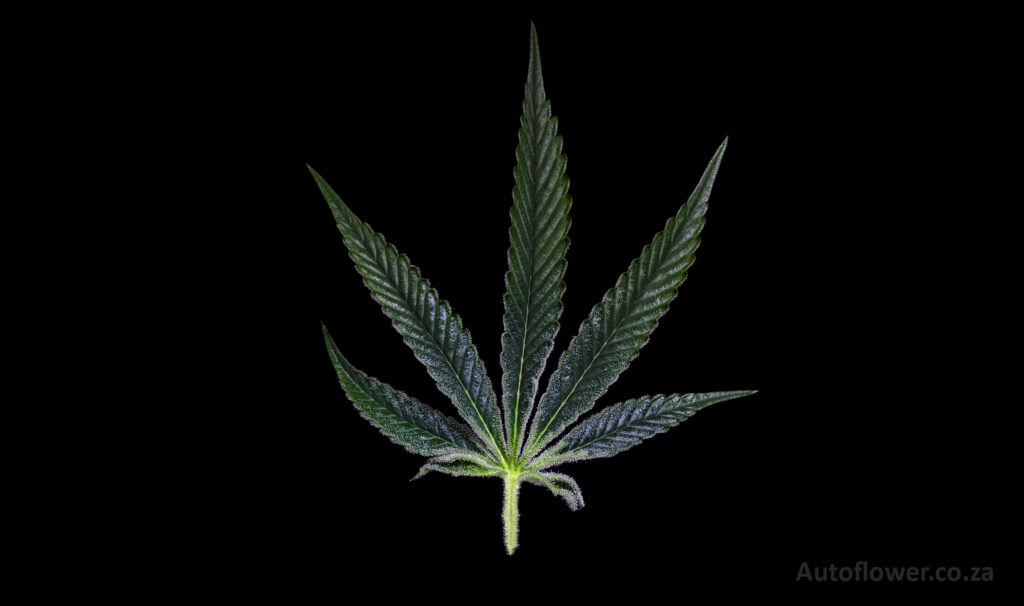
In the vegetative phase, autoflowers tend to grow quite quickly compared to other cannabis plants and can often already have 4 or more sets of true leaves by week 3 or 4. This period of rapid growth is the ideal phase for training the plant.
Autoflowers aren’t always trained in the same way as photoperiod plants. Photoperiods are most commonly trained with topping, which is done by cutting the top off the main stem, forcing the plant to establish 2 new main streams as the axillary buds below the topped area become the new top.
Instead, a method called LST (low-stress training) is more commonly applied. Although LST is an umbrella term to describe several low-stress techniques, the most commonly used LST method is bending the plant’s main stem down and over, ensuring it’s not the highest point on the plant. This causes the plant to redistribute its growth hormones, pushing more growth towards the axillary buds and side branches. It also increases the light to these other bud sites.
It’s also common to see tucking of the fan leaves, which increases light to the inner nodes. On a photoperiod plant, this would usually be done by removing the leaf (defoliating), but autoflower growers often believe the stress from defoliation is too much for ideal growth, making leaf-tucking a low-stress alternative.
The veg stage can last anywhere between 10 days and 2 months, but 3 to 4 weeks is about when most autoflowers will start flowering, which is then followed by a 10 to 15-day period of stretching, where the plant growths with extreme vigor. When trained correctly, this burst of new growth can set the plant up for impressive yields, especially if the plant had a longer veg time, a factor that is in many ways unpredictable.
The Flowering Stage
- Flowers out slightly quicker than photoperiods.
- Many autos tend to stretch quite hard going into flower.

Once in the flowering stage, there’s not much that separates the autoflower from the photoperiod. They both have similar flowering times, but autoflowers do tend to finish a little quicker, perhaps a trait brought down from their Ruderalis lineage.
As with other cannabis plants, using a magnifying glass or jeweler’s loupe to see the maturity of the trichomes is the best way to gauge when the plants are ripe. Over time, you’ll be able to eye it out.
I’ve found that autoflowers tend to stretch a bit more into their flower cycle than photoperiod plants, perhaps another feature carried down from its challenging ancestral climate.
Harvest & Smoke
- Likely to yield less.
- Autos can have a great smell and flavour when dried and cured correctly.
- Can still be potent.

Harvest the plants as you would any other variety, and place them in a room with gentle air movement (not directly on the buds) ideally at around 55-60% humidity and in cooler temperatures. Once the stems snap, take it down and jar it.
Always remember that the yield is going to be quite low, due to the limited veg time. Some people get upset when they have a plant flower out in week 2 of veg, or struggle to yield after undergoing minor stress. This is a part of the process with autoflowers, and you can’t always predict how big your plant will be. There are things called Superautos though – which you may want to look at.
When you light up an autoflower nug, you’re not even going to know the difference. Some people still think autoflowers lack THC, but this is a relatively dated way of thinking that is more closely aligned with how the Lowryder smoked. Modern autoflowers can be flavourful, potent, and even yield well.
A Summary of Autoflowers
Overall, autos offer a unique way to grow. They’re ideal for outdoor growers who can even grow them through the winter months. Although they may yield less, more seeds can be planted for higher collective yields. Although they aren’t for everyone, autoflowers have come a long way since the early Ruderalis and Lowryder origins, with many modern strains rivaling the quality of photoperiod plants.